Disposable cameras for weddings: costs, tips and alternatives
What disposable cameras really cost to buy and develop, how many you need, tips for better shots and the digital alternatives.
Updated · 7 min read·By the DropSnaps team
Quick answer
Disposable cameras give wedding photos a fun, nostalgic film look, but each camera takes a fixed number of shots (usually 27), there's no video, and you pay to have every film developed and scanned, then wait for the results. A QR code photo-sharing page collects guests' phone photos and videos the same day instead, and many couples use both.
Questions people ask
Are disposable cameras worth it at a wedding?
They're fun and give a lovely film look, but they're one of the more expensive ways to collect photos once developing is included, there's no video, and a good share of the shots come back dark or blurry. Many couples put out a few for fun and use a QR code photo-sharing page for everything else.
How many disposable cameras do I need for a wedding?
One per table is the usual rule, so about one camera for every eight to ten guests. Add a couple for the bar and the dance floor if you want evening photos.
Can I get disposable camera photos digitally?
Yes. Most developing labs scan the film and email you a download link with the digital files, usually for a small extra charge on top of developing.
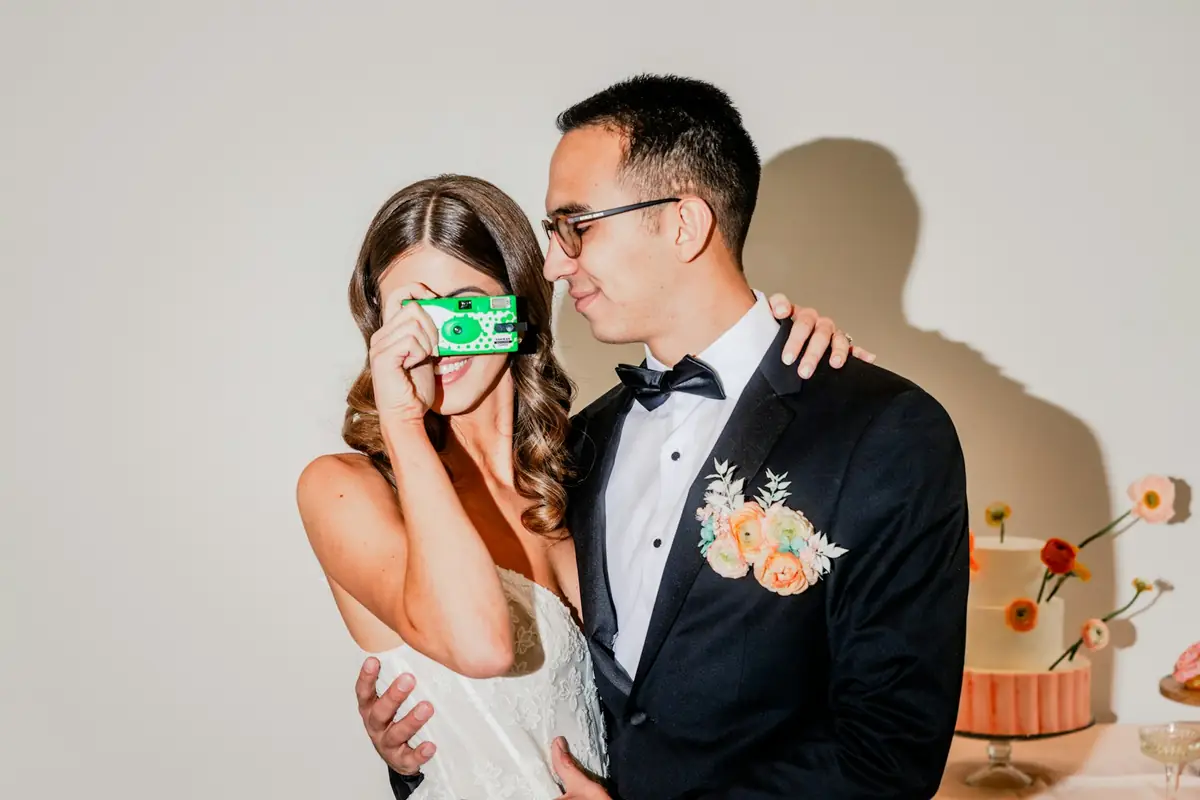
Disposable cameras on the tables are a wedding favourite: guests love the click and wind of a film camera, and the photos come back with a warm, nostalgic look nobody's phone can quite copy. But they're also one of the more expensive ways to collect your guests' photos, and the results can be hit and miss. Here's what they really cost, how many to buy, how to get better photos from them, and the digital alternatives.
What do wedding disposable cameras cost?
These are typical UK prices we found on 7 October 2026. Prices move, especially online, so use them as a guide.
Typical UK price
One 27-shot camera with flash
£15.99 to £19.99
A pack of ten cameras
£139.95 to £184.99 (about £14 to £18.50 a camera)
Developing plus digital scans, by post
About £10 to £14 a camera
Developing with 6 × 4 prints, on the high street
About £12 to £14.50 a camera, plus £3 to £4 for a CD
A camera with developing included
From about £25
So one camera, developed and scanned, costs roughly £26 to £34. For ten tables, a pack of ten cameras plus developing and scans comes to about £240 to £325, for at most 270 photos: roughly 90p to £1.20 a photo, before any blurry or dark ones.
How many disposable cameras do you need?
The usual rule is one camera per table, so about one for every eight to ten guests. Add a couple for the bar and the dance floor if you'd like evening photos, and keep one spare for the children's table.
Each camera takes a fixed number of shots: 27 is standard, and some Kodak cameras take 39. Ten cameras means 270 photos at most, for the whole day.
Which camera to choose
Kodak FunSaver uses ISO 800 film, which copes better with dim rooms and evening light.
Fujifilm QuickSnap uses ISO 400 film and has a flash; it's the classic choice.
Black-and-white cameras, such as the Ilford HP5, give timeless photos and forgive mixed lighting.
White "wedding" cameras, such as Praktica's, are the same kind of camera in white, and look lovely on the tables.
Whichever you choose, buy ones with a flash: receptions are darker than they look.
Tips for better disposable camera photos
Put a card with each camera saying what to do: "Wind, flash on, get close, take one of your table."
Use the flash indoors and after sunset. The flash on these cameras only reaches about 1 to 3 metres, so get close.
Hold the camera still and keep fingers away from the lens and flash.
Give each camera a job. A list of shots on the card ("the couple", "your table", "the dance floor") stops all 27 being taken of the same three people.
Choose a collector. Ask a bridesmaid or usher to gather every camera at the end of the night, before they go home in handbags.
Keep them out of the sun. Heat can damage film.
Getting them developed
Post them to a film lab or take them to a high-street shop. Ask for scans (digital files) as well as or instead of prints, so you can share them. Most labs send a download link; some return the negatives too.
Allow time: in our checks, turnaround ranged from a few days to about three weeks. Some labs offer a discount for several films at once, so ask before you send ten.
The downsides
A fixed number of shots, shared by a whole table, and nothing at all from guests who don't pick the camera up.
No video: no speeches, no first dance, no dance floor.
Weeks of waiting, and a share of photos that come back dark, blurry or of the tablecloth.
Cameras go missing, and every one you lose costs £14 or more.
The digital alternatives
Your guests already carry a good camera. There are two ways to use it:
Disposable-camera apps, such as POV and Lense, copy the film experience on guests' phones: a set number of shots each and a reveal later.
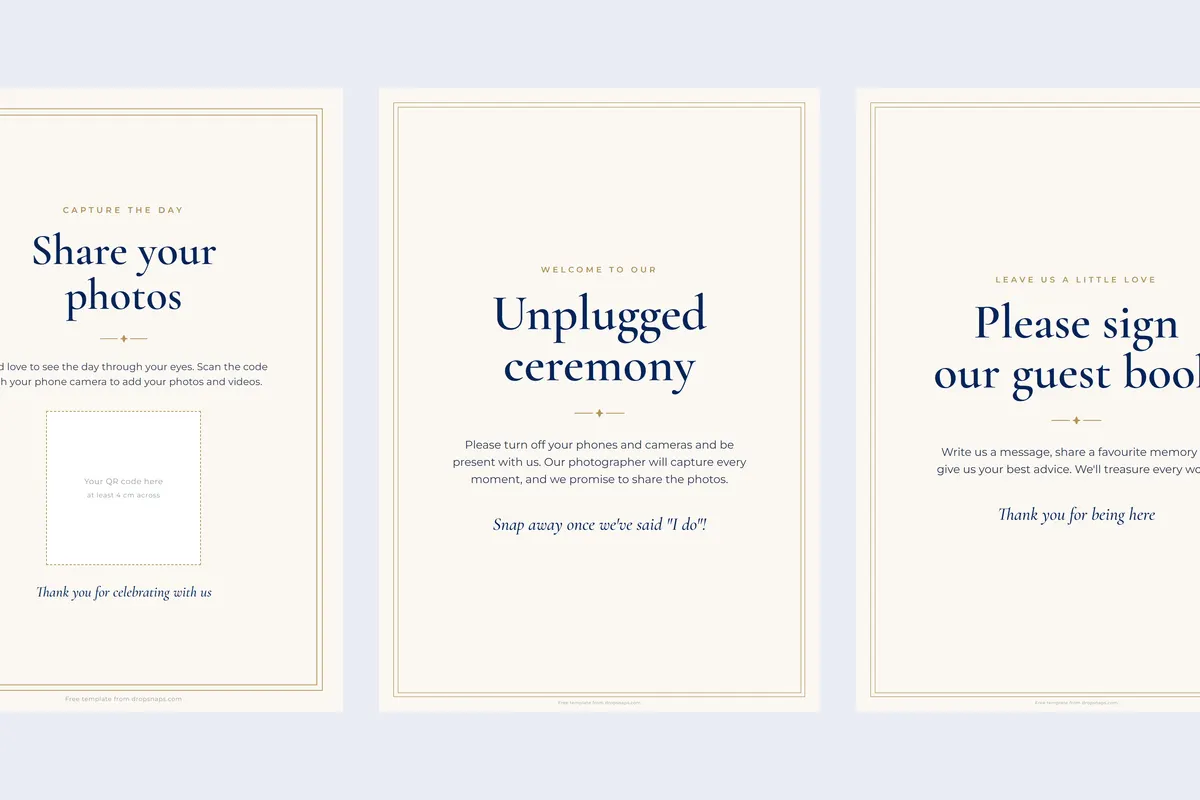
QR code photo sharing, such as DropSnaps, collects every photo and video guests take, in full quality, straight away. Guests scan a code on the table and share from their camera roll, with no app, and everything appears on a live wall and a TV slideshow at the reception.
Plenty of couples do both: a few disposable cameras for fun and the film look, and a QR code on every table for everything else. When the scans arrive, add them to your photo-sharing event so every photo of the day ends up in one place.